part of SIGN 1988-2018 (WIP)
Low-Eroei Manifesto:
A First-person-view
of the Nomadic
State-of-Being
Tommi Vasko - 2015
1. THE STAGE FULL OF ANONYMOUS MATERIAL
I was born a year before the UN commissioned report Our Common Future more or less defined the term sustainable development.1 There have been scien-tists ever since the 19th century who have warned about the green house effect – caused by extensive burning of fossil-fuels – but it took until the 1990s before mathematical climate models were able to create scientific proofs which could show that these rapid changes in the atmosphere are actually a consequence of a human activity. The new goal – sustainability – was a reaction to this emerging consciousness of our collective responsibility over the biosphere which is greatly being influenced by the idea of progress which again is powered by burning the hydrocarbon corpse juice.2 The forward-looking pathway this report lays has two main goals: wealth redistribution – prioritizing the needs of the global poor – and awareness of limited material resources of our planet which should be sustained in a way which would give the future generations an opportunity to fulfill their necessary needs.
Energy is everywhere and it transforms everything.3 Our immediate surroundings - the stage - is for the most part constructed within the last 150 years with energy released from high-quality fossil-fuels. Today the tellurian lubricant (oil) underlies every narration on Earth.4 If we read recent history from this perspective many things, acts and ideologies are seen from a slightly different perspective. One could say that urbanization, the rise of youth culture, sexual liberation, idea of infinite growth and individualism are all born from this sudden ecstatic burst of excess energy: a liberation from physical labour which is suddenly done for us by fossil-fuels.
Georges Bataille describes this ecstatic sensibility of exergy: the Sun gives constantly and never receives in return. Human life on top of the biospheric food chain is not a battle of scarce resources but an orgy of infinite energy.5
This excess energy certainly has made human life in the downstream – at the end of the pipeline - more beautiful, exciting and fulfilling in many ways, but at the same time it has disconnected our emotions, habits and thoughts from the processes that sustain our existence on this planet.6 Action of oil directs human life into disruptive lifestyles which disconnect us from our tellurian roots and renders materials around us anonymous and complex. It is almost impossible to know where manmade things – commodities, images, infrastructure etc. – come from: how, where and under which conditions they are made or where they end up after we dispose them. What for example plastic essentially even is?
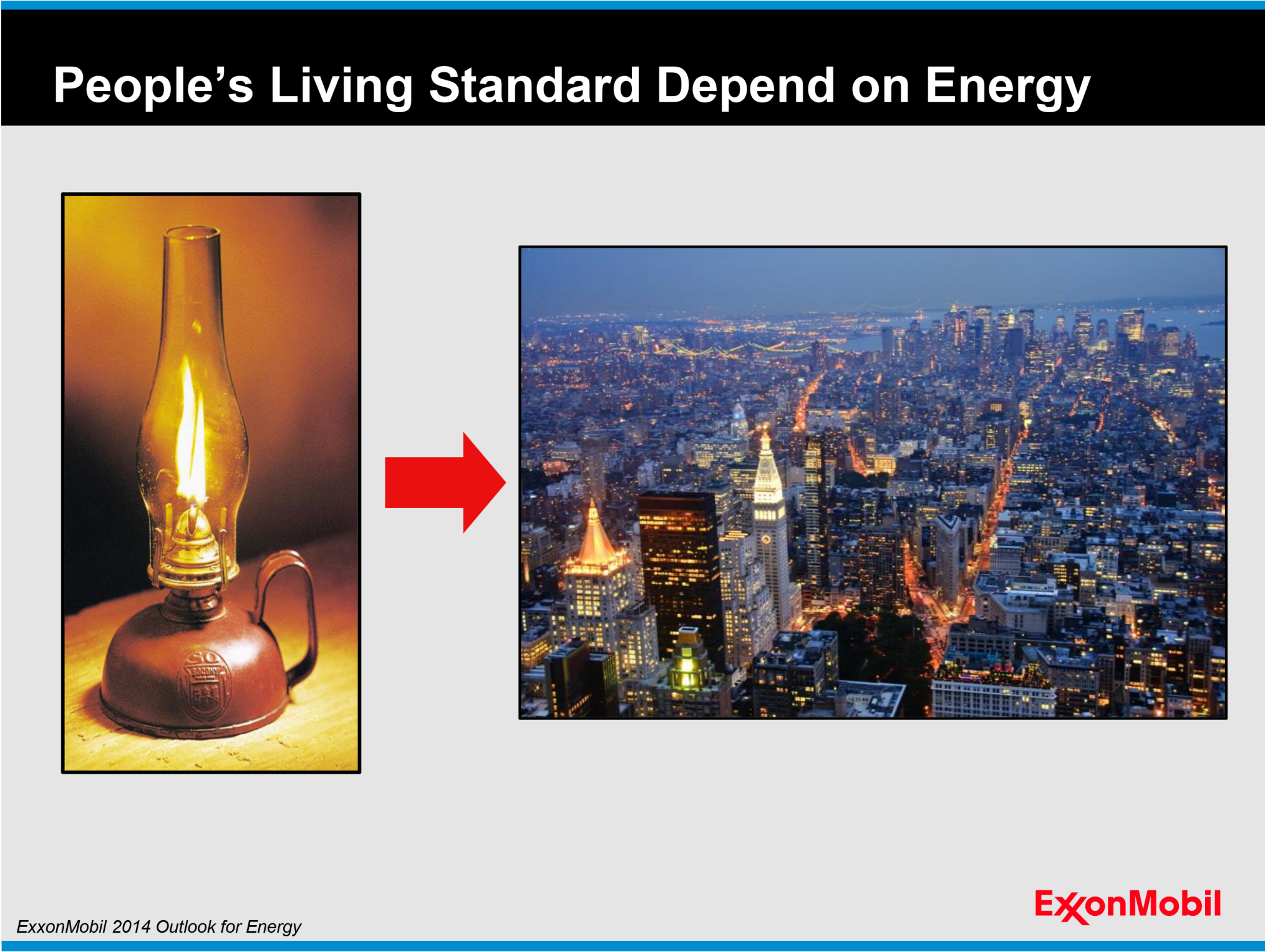 ExxonMobil is one of the biggest oil corporations and also one of the biggest climate change deniers campaigning against the scientific consensus.
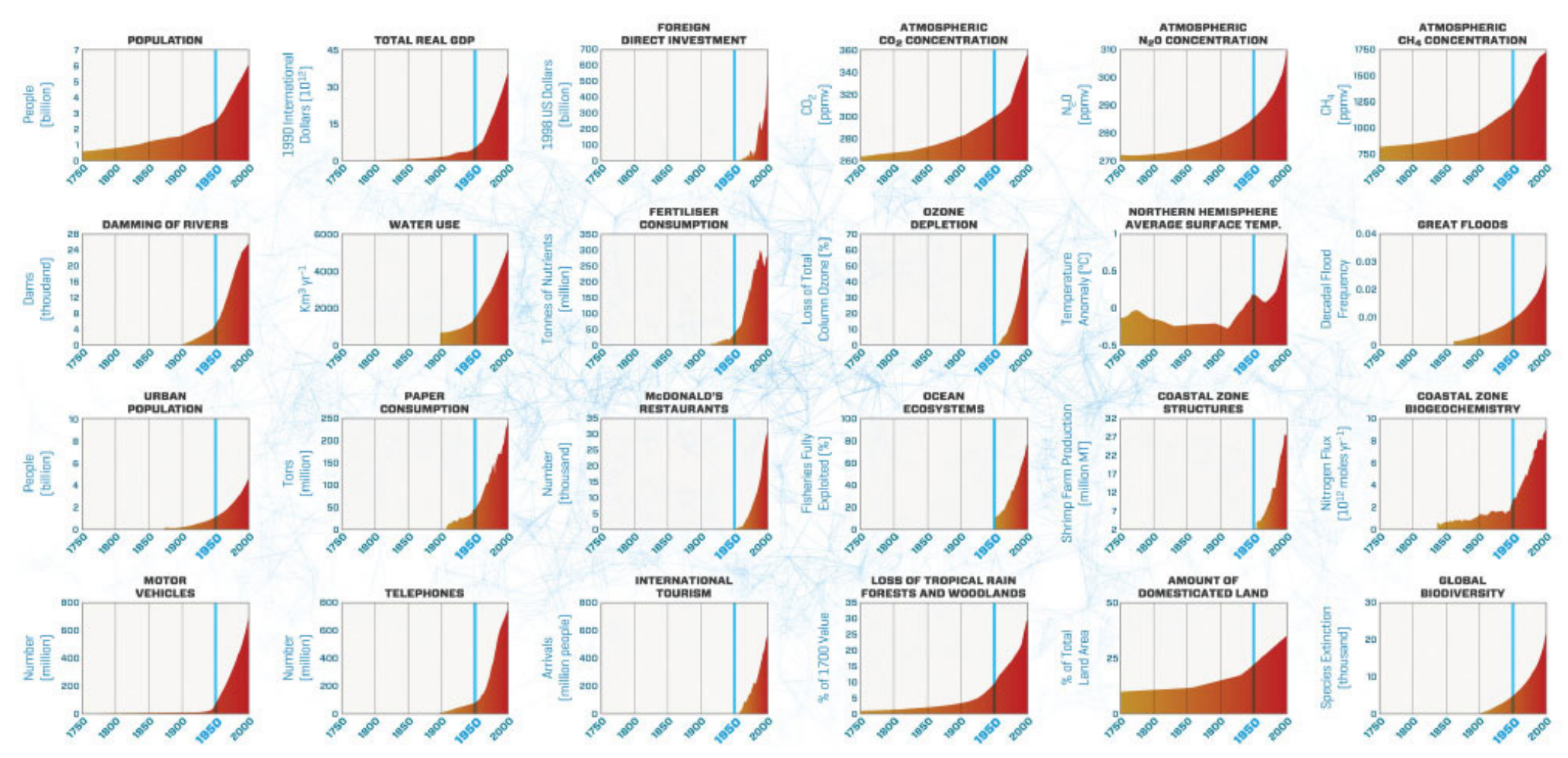 The Great Acceleration is a term which describes different rapid transformations of the biosphere and of human civilization within the last 150 to 50 years
The oily play in which we are acting diminishes the knowledge that we would now need in the strive for sustainable future. We are feeling lost in the middle of this man-made world.
Now, whether we like it or not, the times of excess will soon be over. If the world human population would grow within the same tangent as since the 50s – from the 5 billion it was when i was born, and from 7 billion it’s now – it would reach 13 billion still during my lifetime.7 At the same time the global warming will increase desertification and decrease areas suitable for food production. Not to forget that we already use 1.5 times more resources than the Earth is able to regenerate. The Intergovermenatal Panel for Climate Change warns that what ever we do radical changes will happen by 2050. The peak oil future will be characterized by higher energy investments with lower energy return.8
What happens when we become conscious that we are not just shaping the future of our planet in a symbolical and metaphorical level, for example in science-fiction novels and Hollywood movies, but also literally as a geological force equivalent to plate tectonics.9 The urgent question of my generation is: what should we do, or rather, how should we act on the stage of the oily present in which modern acts of liberation and cultural progress are played out and when we cannot build our future on top of the same material foundation of cheap high-quality fossil-fuels as the previous generations of modernity before us?
2. CHOREOGRAPHY OF OILY ACTION
Electromagnetic radiation from the Sun hits an object on Earth which reflects some of the rays directly through an optical lens into an enclosed box in which light sensitive sensor converts the electromagnetic energy of the Sun to electronic signal. The information is processed into a raster image which could be displayed on a digital display in form of pixels – artificial electromagnetic radiation passing trough an array of rectangular liquid crystal units – and trough the iris of an eye into the retina in which photoreceptor cells turn this electromagnetic radiation into neural impulses which brain can finally read as an “image”.
Cameras record moments but as material objects they also work in reverse; these enclosed boxes can create very particular action in front and around them. A hand made wooden replica of a point-and-shoot creates different action than a high-end digital film camera. All the action and all the processes which happen outside the frame and focus remain mostly lost and unrecorded. One can say the more energy – fossil-fuels – are condensed into a camera-object the more concentrated action, more energy investment and more work will take place around it. Workers of contract manufacturers in China. Miners abstracting rare earth minerals in Congo. Ad-campaign art directors abstracting the product into a visual identity in California. Capital of the stock holders dispersed over several tax-havens on faraway Islands. Oily objects create oily action.
If we think Walt Whitman is one of the poets who was able to describe in words the intense passion of what it means to be alive, it makes sense that the mul-tinational consumer electronics corporation Apple wants to use his passion
to describe how their products are able to amplify normal life into one full of passion and fulfillment.10 But, by embracing this powerful and encouraging play
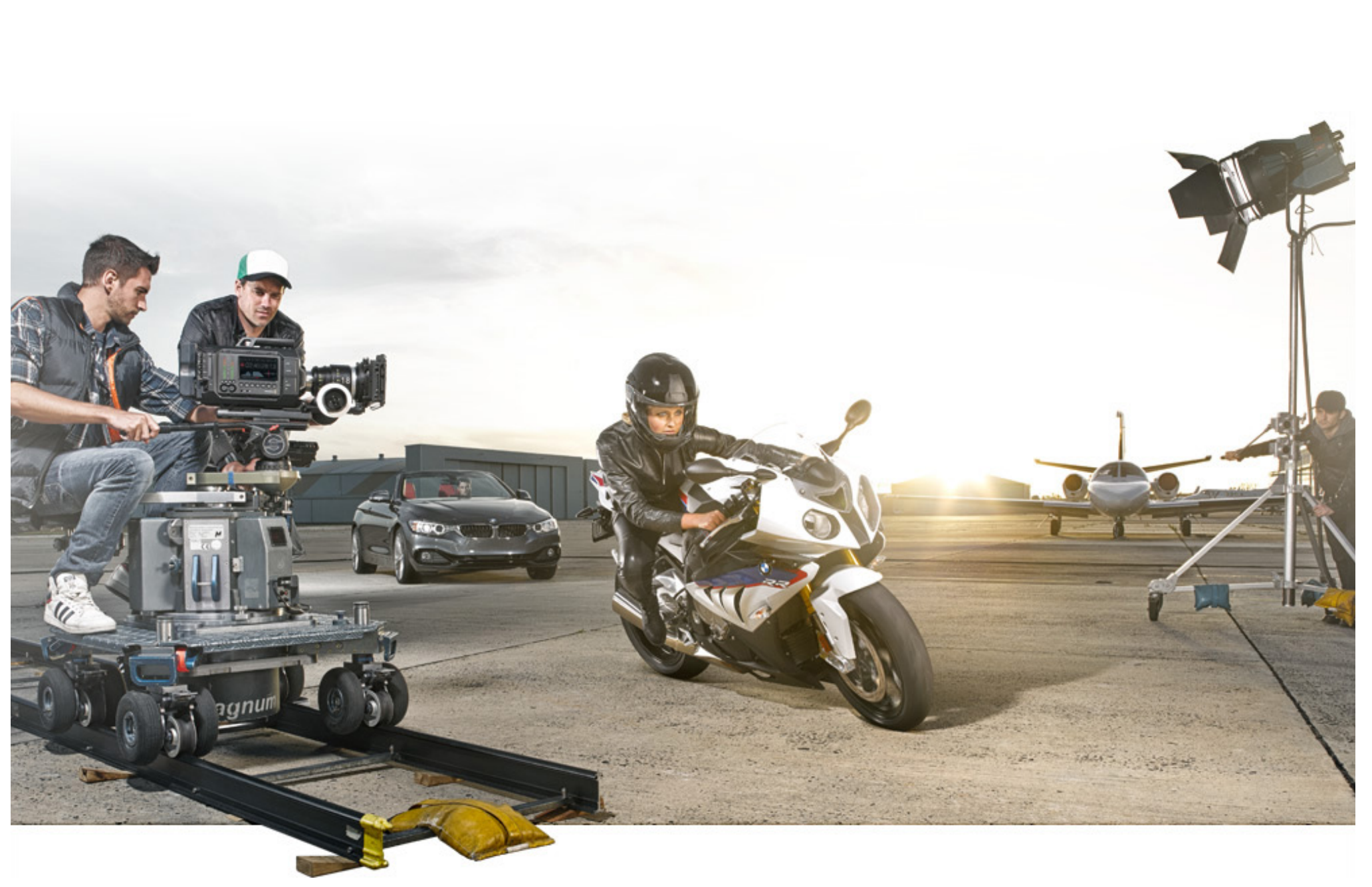
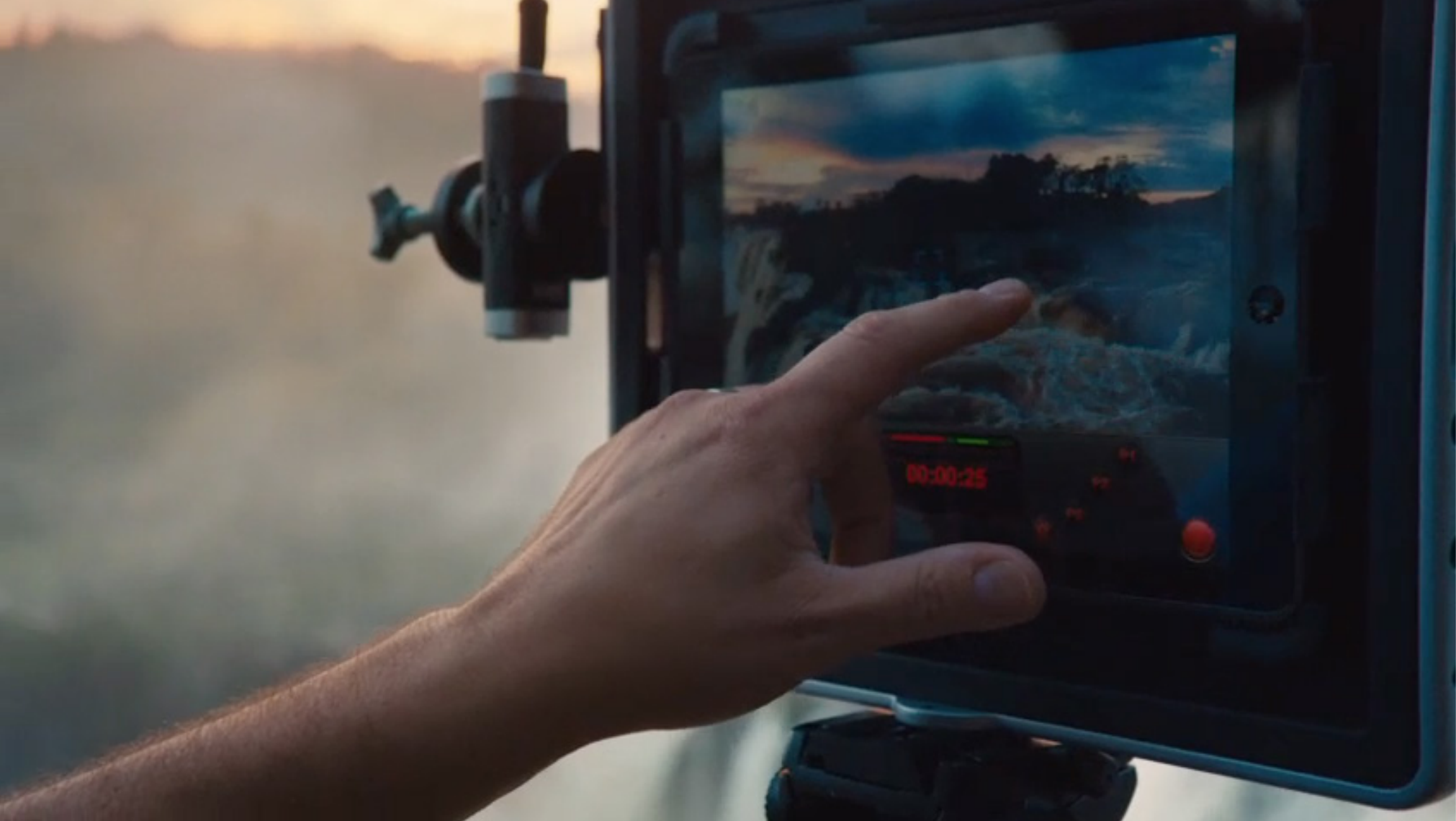 A still from an apple iPad Ad “Your Verse“
that goes on around the object, the company ignores all the material and social foundations – all the work – that is needed to bring the products themselves into life. The abstracted and outsourced workers on assembly lines, truck drivers transporting parts from one subcontractor to another, someone cleaning the toilets and of course high-quality hydrocarbons and pipelines which keep the whole society operating.11
In this process images and identities become merely a dialogue between us humans and the human-made and increasingly smarter technological infrastructure. The progress of more data, increasing amount of megapixels and more adaptive manipulating tools is a feedback-loop which aims towards making better visions of the world-as-it-should-be-with-technology, not better pictures of the material world-as-it-is. And as the devises get more complicated the processes which keep them running become almost impossible to understand. We rely on intuitive interfaces, factory presets and anonymous automatization. We learn to dream in the language of the techno-linguistic machine which is in inseparable symbiosis with cheap high-quality fossil-fuels.12
The belief - or hope - on technological development narrows down our possibil-ities to influence our own future. The self-directing logic of the fossil-techno-in-frastructural mesh sweeps out of existence many fundamental principles of democratic decision making.13 The oily technological utopia of frictionless and perfectly efficient world does not believe in long mediations and negotiations between clashing interests, nor making hard and big political decisions that would make our life difficult now but which would have positive far reaching consequences on time-scale that sustainable thinking requires. The technology we would need would be designed and engineered from rooted and materially aware point of view. It would acknowledge and help us understand the material limitations and the geological time-scale of our planet. it could not be dependent on cheap fossil-fuels. It would not establish destructive geopolitical dependencies between the rich and the poor. It would be just a tool to root ourselves back to the biosphere.14 We need to be clear which comes first: technological development or democratic decision making.
3. A HUMAN COMES ON TO THE STAGE AND TELLS A JOKE TO A NOT-HUMAN (THE HUMAN LAUGHS)
There are two ways to deconstruct – or re-territorialize – a fossil-techno-linquistic machine: by smashing it, or by engaging it in a discussion about peakoil future.
This scene brings to the stage a character of the Nomadic State-of-Being. In this role one experiences disrupted reality, not as history - or the world -
coming to an end, but as future coming together.15 It’s not a good or bad nor a bright or gloomy future. The role is an ability to live in an intermezzo,16 to move between beautiful but unsustainable present and a future that remains invisible and unknown. It is an empowering belief that the catastrophe which seems evident will bring towards for post fossil intensity, what ever it will be.
To understand the inhumane reasons behind this new geophilosophy we need to ask: what in the Nomadic State-of-Being is a principle and what is only a consequence?17 The sentient connector between the principle of sustainability
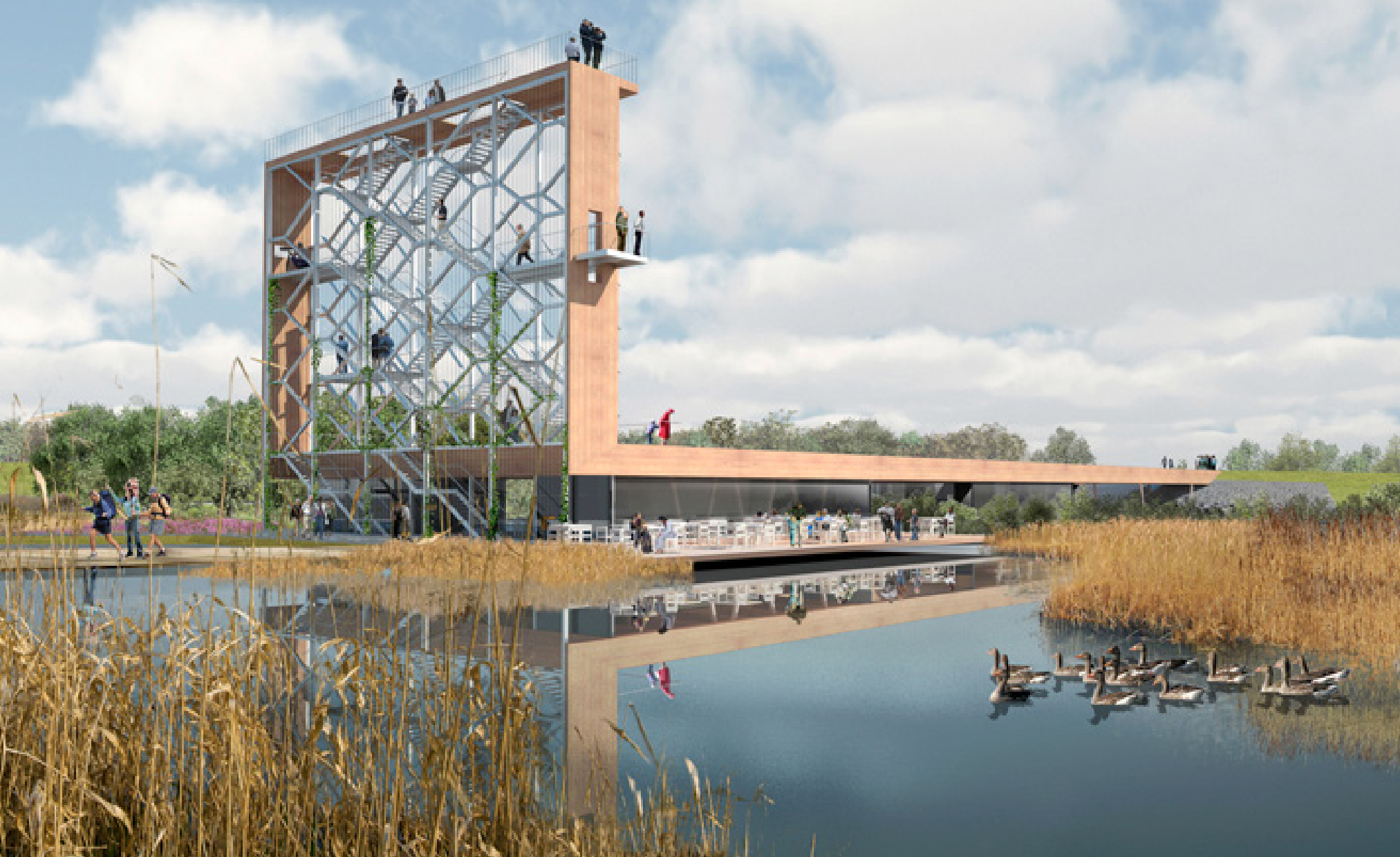 Oostvaardersplassen, a nature reserve area in Lelystad in the Netherlands is developed to resemble nature that would have existed on European river banks and deltas before human disturbance.
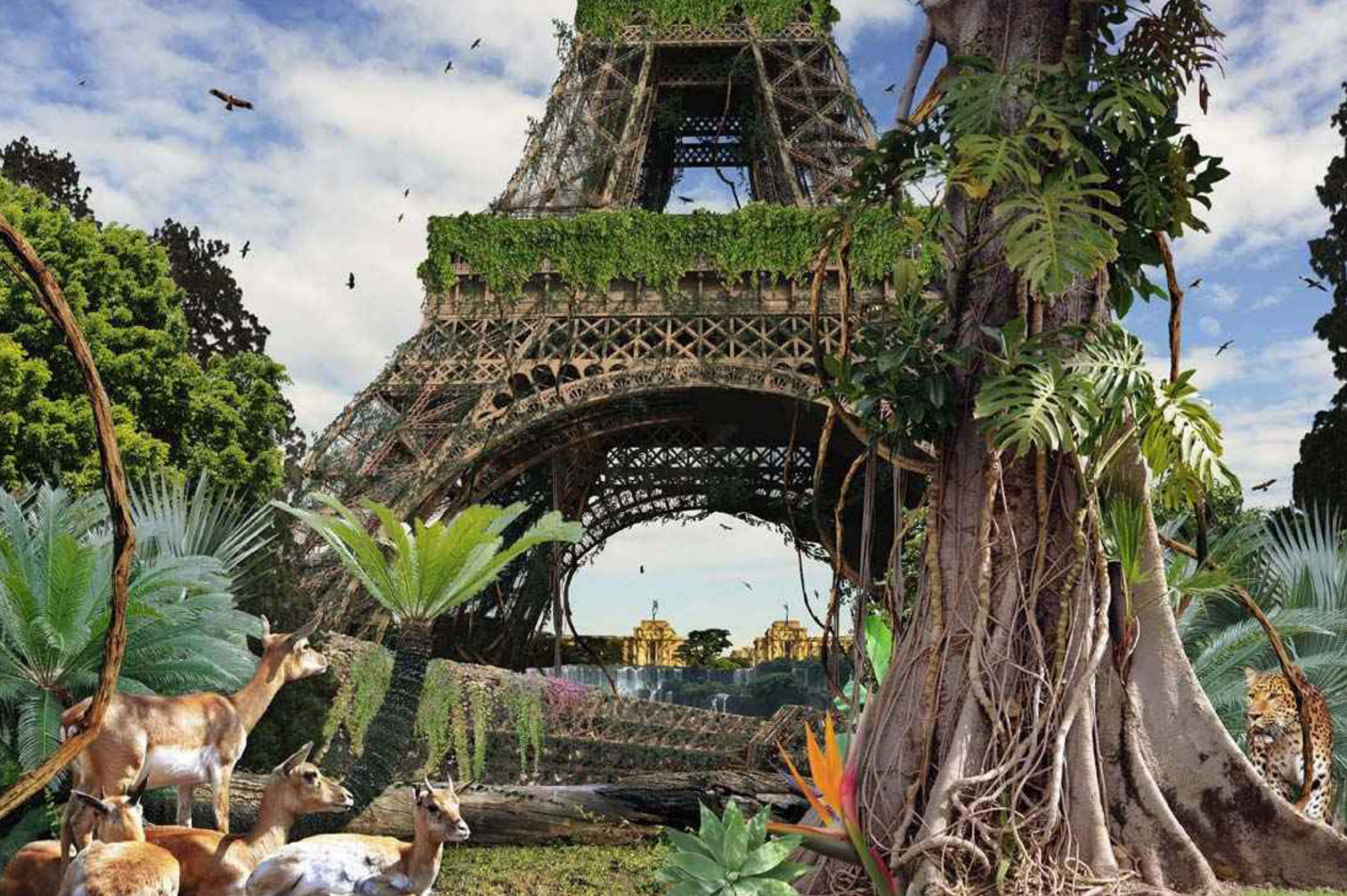 The World Without Us, illustration of Paris after human extinction
and how it’s transformed into truly sustainable action lies in becoming aware of our position in the biosphere.18 The knowledge-of-births that oil has disrupted, the awareness of the long-term effects of our behavior that is far beyond a human lifespan, introduces ourselves into a play which reaches far beyond limited human perception.19 If we want to face the facts and try to go towards still unknown sustainability, we need to figure out new ways to read the stage we are on, new ways to re-territorialize to the complex material reality we are living in.
It is the rational performer who is aware of its planetary-scale interconnectedness and its roots in the biosphere who can lead us towards understanding how the principle of sustainable future could be translated into new sensibility, into new characters, into meaningful work, into new visual language, into new beauty, into new meaning. The tool that is used is not a liberating technological devise or a smart app but a sweaty, physical, erotic and poetic body. A body with rationality which is able to work together with scientific theories, sustainable infrastructure and -technology like a contemporary dancer. Contact-release, fall and recover.
The performance of the Nomadic-state-of-being aims to produce aesthetic disillusions and paradigm shifts: changes in the way we read the immediate and the familiar around us.20 New discoveries and inventions are performed in front of a familiar image which is transformed into materially conscious and socially aware physical sensibility. In this way, nomadic state-of-being is not an escape from current social reality. It’s also not an ignorant or helpless drift on global economical undercurrents, but the opposite: a consequence of a conscious and rational decision to face the difficulties and an ability to act out the immediate and the familiar so that it is seen from a different perspective. It’s a tough journey upstream a river which is flooding with hydrocarbon corpse juice.
4. DE-RENDERING OUR COMMON FUTURE
Rendering is the ultimate act of abstraction. The original meaning of the word comes from meat industry where rendering is a process in which livestock leftovers are melted and extracted into anonymous ingredients used for example in explosives, pharmaceuticals, toothpaste and in Chicken McNuggets.21
In a similar way 3d-renderings are abstractions in which multiple sources of imagery – generic stock footage, AdSensed google image search, 3d-modeled objects and layers of graphic elements and visual effects – are disconnected from the processes that connect them to the material world and put together into an image file which has absolutely no connection to the material limitations of our planet. The re-recycled image – an outcome of the compression deformation effect just like plastic– can be read anywhere and on anything without knowing any of the conventions or processes of image making. The god-like image-maker here has complete control over the disconnected reality the image presents.
We need to do this action of disruption in reverse: we need to de-render this oily and hyperreal present back to bodily performance where the knowledge of rooting back into the biosphere is created and acted out into gestures towards sustainable future. This is the task of the Nomadic State-of-Being.

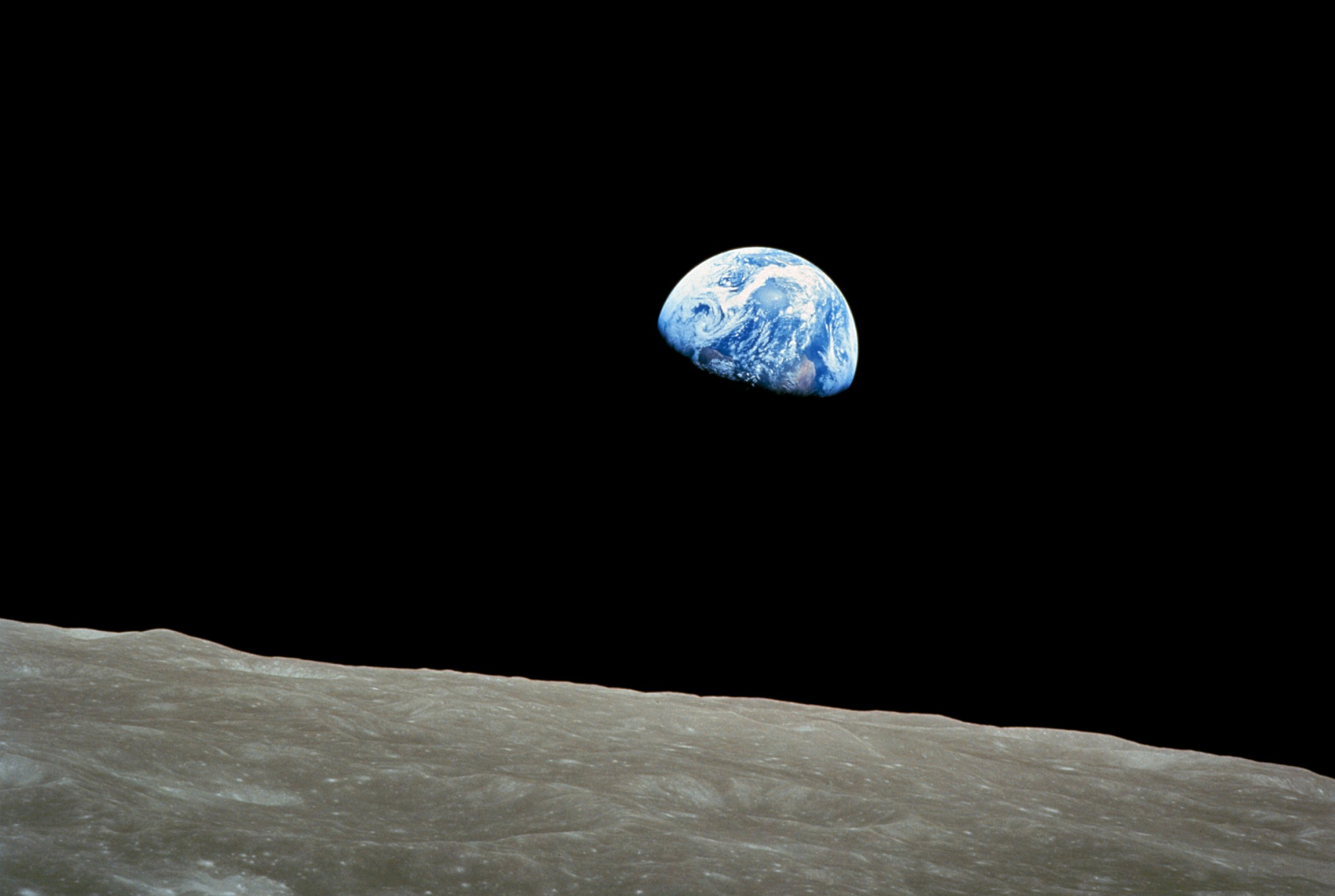 In the middle of the 20th century, we saw our planet from space for the first time. Historians may eventually find that this vision had a greater impact on thought than did the Copernican revolution of the 16th century, which upset the human self-image by revealing that the Earth is not the centre of the universe. From space, we see a small and fragile ball dominated not by human activity and edifice but by a pattern of clouds, oceans, greenery, and soils. Humanity’s inability to fit its activities into that pattern is changing planetary systems, fundamentally. Many such changes are accompanied by life-threatening hazards. This new reality, from which there is no escape, must be recognized - and managed. (Our Common Future. 1987)
On the stage with the Nomadic State-of-Being there is also a another character: Doom-Mood. Both of the characters agree on some metaphysical principles that the act of facing-the-facts require. They acknowledge that “time is not only a structure of phenomenal experience, but that phenomenal experience itself emerges in time.” The geological timescale which is prescribed in these rational facts reaches far beyond the one of YOLO.22 The Earth and the universe did exist before humans and will continue existing after the subjective experience of death. They also agree on the requirement of the idea of ecological co-existence: they both are actors, material entities interacting in a material play which consists of other material actors such as an exported Dutch tomato, a camera satellite and a weather pattern which all have a role to play on the planetary-scale stage we all co-inhabit.
The conflict is in the way they trust on politics and human abilities to create radical narration and change. Doom-Mood is a dystopian disbelief on human ability to take the difficult steps towards still-unknown - and probably in some scale catastrophic - future. In this role it’s easier to give up and imagine an end of the world than come up with an alternative for the fossil-capitalist realism of today.23There seems to be no conditions or reasons to move the ball forward.
The only positive scenario is a world without us. Graphs, reports and frustration take the whole stage, there is no space for improvised dance, intensity or creative wastefulness.
We need to understand what is becoming of us when we choose to face the facts and embrace discontinuous image of future. We need to role-play these characters and come with visual languages that are both: rooted into our immediate material surroundings and still able to dream utopian social structures and post-fossil intensity.
Notes
1. also known as the Brundtland Report. It placed environmental issues firmly on the political agenda; it aimed to discuss the environment and development as one single issue.
2. Sustainability is actually extremely ambi-tious goal. “It is a simple empirical fact that there has never existed a modern industrial society that has been ecologically sus-tainable. All known examples of industrial societies have relied on non-sustainable use of (mostly non- renewable) natural resourc-es (timber, coal, natural gas, oil, minerals). In contrast, the anthropological literature contains descriptions of human societies that have been ecologically sustainable for decades and centuries. Typically, these ecologically sustainable forms of life are what Western science calls “indigenous” or, even, more traditionally, “primitive”, actively evading hierarchies, especially states.” (Tere Vadén, Next Nature and the curse of oil, http://www.nextnature.net/2014/02/next-nature-and-the-curse-of-oil/)
3. From The Outlook for Energy: A View to 2040 (ExxonMobil, 2014, http://corporate. exxonmobil.com/en/energy/energy-outlook)
4. I’m following the ideas of Reza Negar-estani in his theory-fiction book Cyclonope-dia. The horror journey to the Underworld begins with petroleum basins and the rotting Sun, continuing along the tentacled pipelines of oil, and at last unfolding in
the desert, where monotheism meets the Earth’s tarry dreams of insurrection against the Sun.
5. In Bataille’s idea of general economy the excess energy must either be spent luxuriously and knowingly without gain in the arts, in non-procreative sexuality, in spectacles and sumptuous monuments, or it is obliviously destined to an outrageous
and catastrophic outpouring, in the contem-porary age most often in war, or in former ages as destructive and ruinous acts of giving or sacrifice, but always in a manner that threatens the prevailing system. (Georges Bataille, The Accursed Share, New York: Zone Books, 1991)
6. I’m highly inspired by a book: Energia ja kokemus, (Energy and Experince) where the writers (inspired by Reza Negarestani) describe the history of western civilization from fossil-fuel point of view. (Antti Salminen & Tere Vadén: Energia ja kokemus, niin & näin: Tampere, 2013)
7. If the population would grow within the same vector it could potentially reach 13 billion around 2075. (United Nations Pro-jections 2010)
8. EROEI, Energy return on energy invest-ment, is the ratio of the amount of usable energy acquired from a particular energy resource to the amount of energy expended to obtain that energy resource.
9. Our global civilization is powered by around fifteen terawatts while the flux of en-ergy from the centre of the Earth is around forty terawatts. (The theoretical maximum work accomplished by humans is 0.7ter-awatts while fossil fuels work for 12 ter-awatts) Of course this energy expenditure is nothing compared to the 170,000 terawatts we receive from the sun, but it is already quite immense when compared with the primary production of the biosphere (130 terawatts). And if all humans were to be powered at the level of North Americans, we would operate at a hundred Terawatts, that is, with twice the muscle of plate tectonics. (Bruno Latour, Waiting for Gaia. Composing the Common World Trough Arts and Politics and Tere Vaden, energy and experience)
10. “We don’t read and write poetry be-cause it’s cute. We read and write poetry be-cause we are members of the human race. And the human race is filled with passion. Medicine, law, business, engineering, these are noble pursuits and necessary to sustain life. But poetry, beauty, romance, love, these are what we stay alive for. To quote from Whitman, “O me! O life!... of the questions of these recurring; of the endless trains of the faithless... of cities filled with the fool-ish; what good amid these, O me, O life?” Answer. That you are here - that life exists, and identity; that the powerful play goes on and you may contribute a verse. That the powerful play *goes on* and you may con-tribute a verse. What will your verse be?”
A dialogue from the movie Dead Poets Soci-ety which is also used in an advertisement for iPad Air, 2014 (https://www.apple.com/ your-verse)
11. In her essay, In the name of love, Miya Tokumitsu critiques Steve Jobs’ libertarian idea of work: that we all should only do what we love. https://www.jacobinmag. com/2014/01/in-the-name-of-love/
12. We learn more impressions from a ma-chine rather than from our mothers. ”Only the conscious remobilization of the erotic body of the general intellect, only the poetic revitalization of language, will open the way to the emergence of new forms of social autonomy.”. (Franco Berardi, The Uprising, New York: semiotext(e), 2012)
13. Evgenyi Morozov critiques Silicon Valley Solutionism as apolitical and material-
ly ignorant. George Packer, Change The World (http://www.newyorker.com/report-ing/2013/05/27/130527fa_fact_pack-er?currentPage=1) and Geoff Schullenberg-er, Secularizing the Tech Debate (http:// www.dissentmagazine.org/online_articles/ secularizing-the-tech-debate)
14. Following the ideas on Ville Lähde in his book Elämää niukkuuden maailmassa (Life in the World of Scarcity) where he tries to imagine how life and politics will look like in the world of scarce resources. (Ville Läh-de, Niukkuuden maailmassa, niin & näin: Tampere, 2013)
15. The positive view of future, Nick Land and the Cybernetic Culture Research Unit
16. The nomad, is thus, a way of being in the middle or between points. It is charac-terized by movement and change, and is unfettered by systems of organization. The goal of the nomad is only to continue to move within the “intermezzo.” (Deleuze and Guattari, Capitalism and Schizophrenia)
17. Deleuze and Guattari, Thousand Pla-teaus
18. Reza Negarestani, The Labor of the Inhuman, parts I and II (e-flux journal)
19. The knowledge-of-births is multi gen-erational rooted knowledge about tellurian processes of certain place of inhabitance. Knowledge that could grasp changes that take several generations to happen.
20. Thomas Kuhn: The structure of scientif-ic Revolutions and Cheryl Foster: Aesthetic disillusionment: environment, ethics, art
21. Andrew Leyon writes about architectural renderings in his article: Using it All, Clog Magazine, Rendering Issue, 2012
22. ‘You only live once’, see for example: make something beautiful before you are dead, video by Steve Roggenbuck https:// www.youtube.com/watch?v=0bR6uOsDn-Q
23. As in Mark Fischers Capitalist Realism