part of Issue 02
Artistry in the Countryside
Paula Biemans
Bierum (NL), 2025
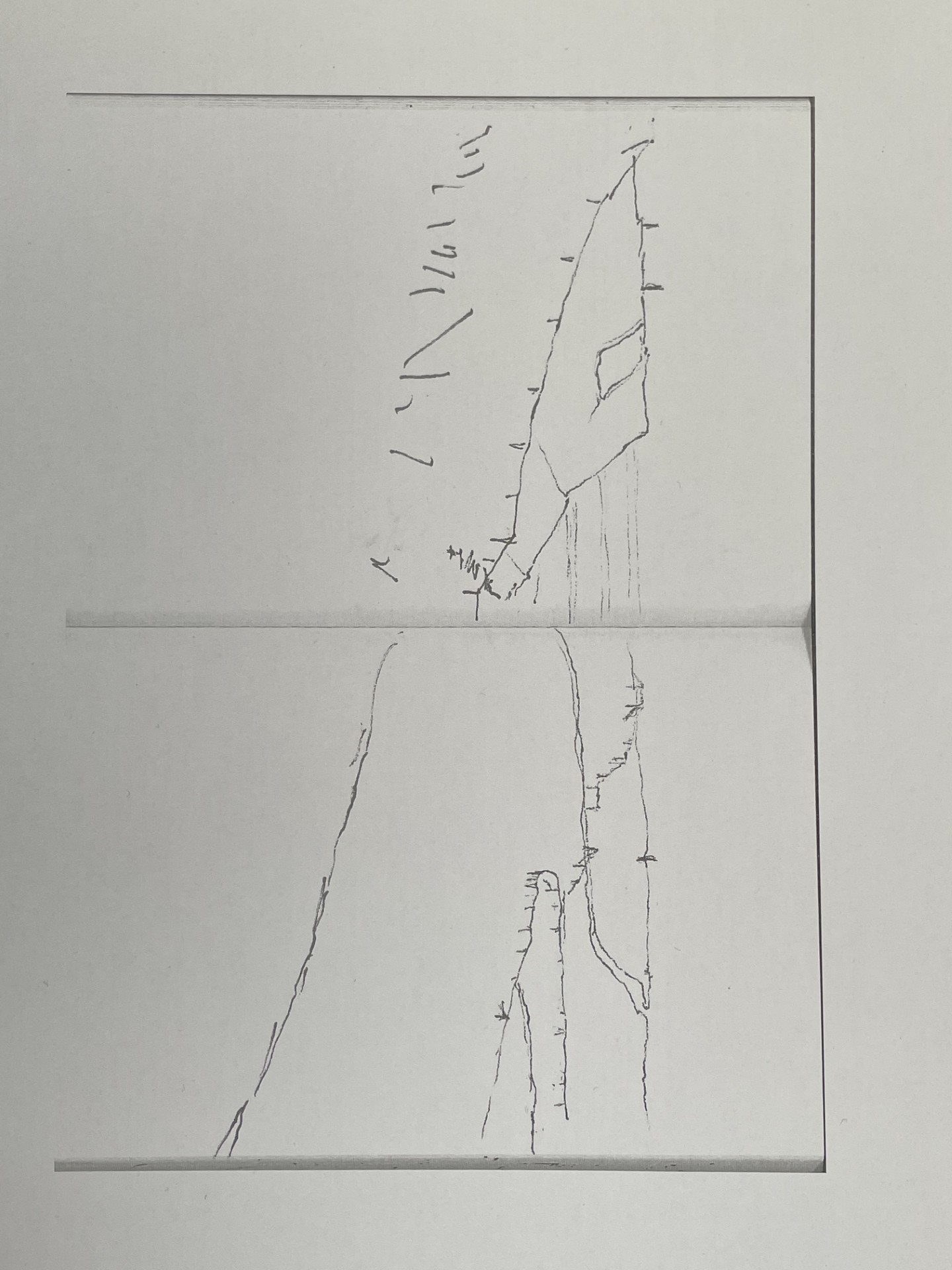
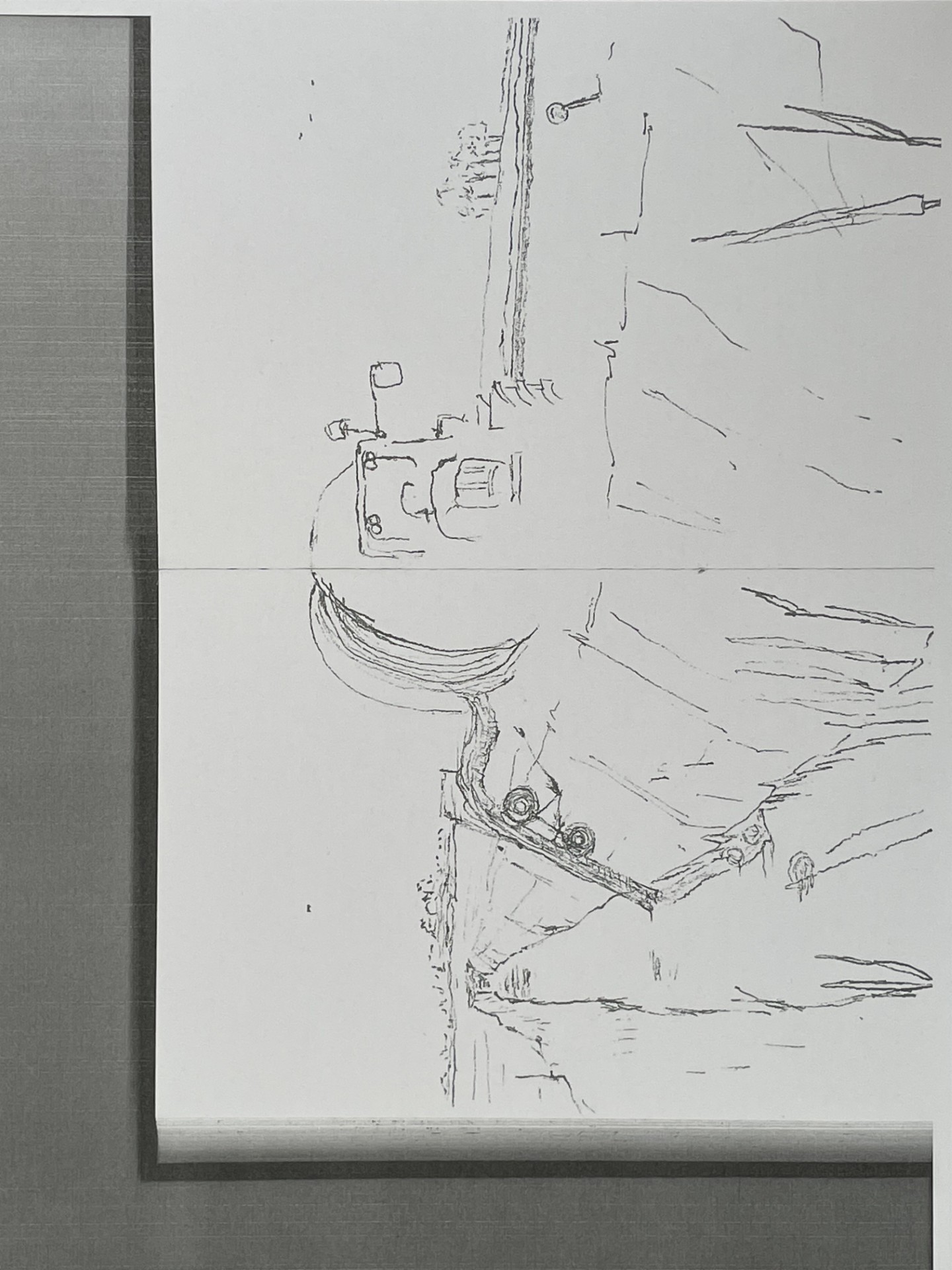
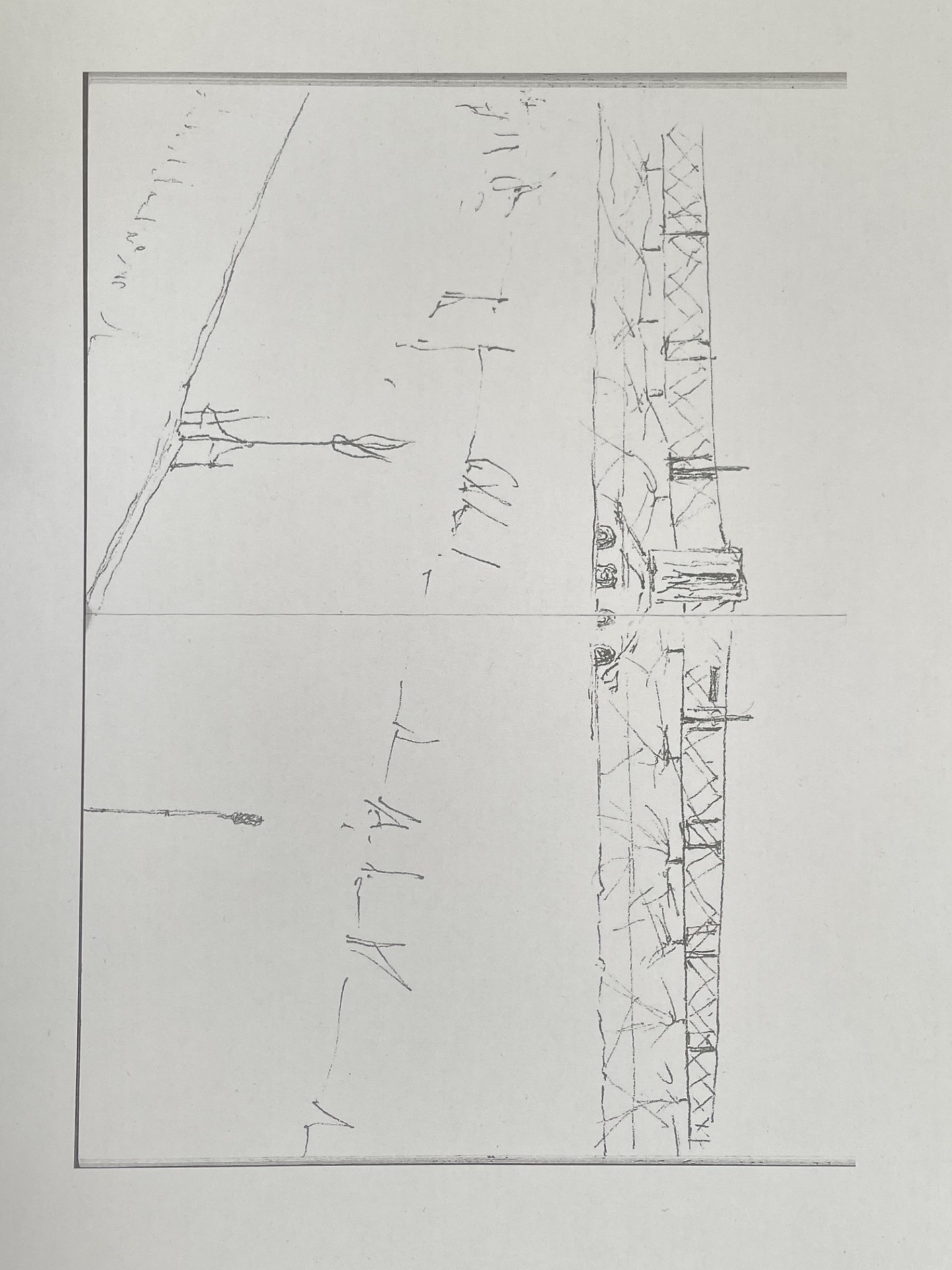
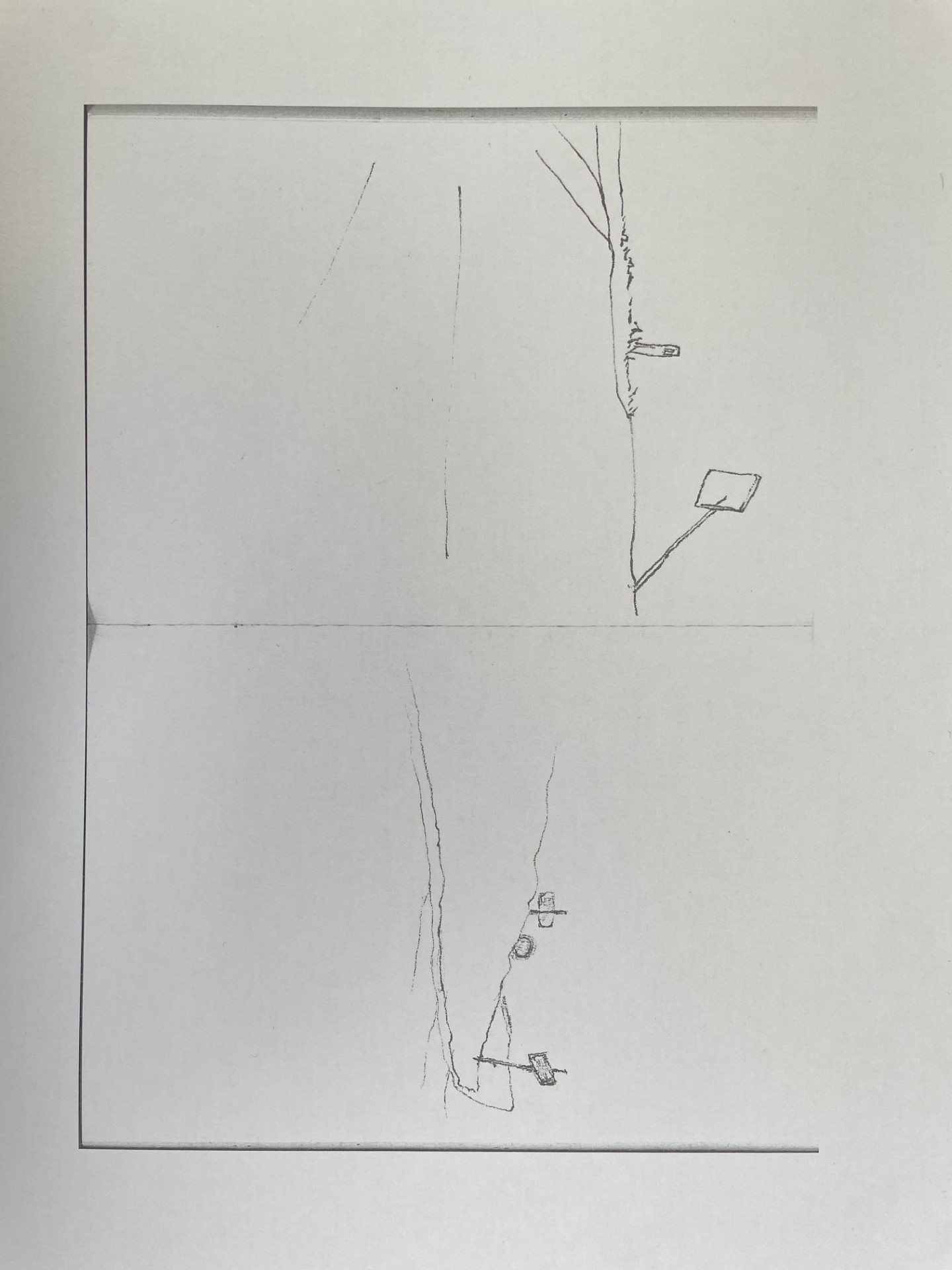
Writings and drawings on life and art in a Groningen village. The drawings were made during the first lockdown (COVID) in 2020. In the countryside around Bierum, I experienced a great deal of space while people in the city were stuck indoors. Several hundred drawings were created while sitting on the dike, in ditch banks, along fields, etc.
For more than 25 years I have lived in a small village (between 600 and 700 inhabitants) in the north-east of Groningen. Not much further to the edge of the Netherlands is possible, Bierum is two kilometers from the Eemsdijk. The road through the village is not necessarily a passage to another destination. Only if you’re here for something, you’re here. There is little flow to other destinations. As a result, a number of families have traditionally ruled here and are intertwined like a tangle. There are a few common surnames, like tribal families. The village originated on a wierd; an elevation in the wet land where people took refuge from high water. The village has many beautiful old houses, in summer most of them have neat gardens full of flowers, all the wooden window frames are varnished every five years and the windows are cleaned every few weeks. I don’t actually remember what exactly I was looking for when I came here. The romance of the countryside? What is that? Did I have a clear image of that? What was my expectation as an artist in the countryside? In this writing (and drawing) I am trying to explore that. I talked to two fellow artists (Can Demren and Eveline van Duyl) who also live or have lived in rural Groningen for a long time. Being an artist in the countryside, what does that mean? How does the landscape affect your work, your ideas and their elaboration? When you live here the romance fades through habituation. For us it is not a little getaway, because we stay, we are here.
I have never thought of rural life as romantic. At least no more romantic than life in the city. As a child, I lived in, let’s say, large villages, ‘regional centers’ without urban allure, with stores, a high school and entertainment venues, a bit of everything but no city. It wasn’t until I was 20 that I flew out and was soulfully happy to live on my own in Arnhem, a provincial town with an art academy (!). It was as if I saw myself walking from above through the streets of my neighborhood, the city center, along the Rhine River, but especially through the hallways of my new school. I was very happy. This was another romantic image of myself in my environment, if you want to call it that. I wore weird long skirts and old boots from a second-hand store.
When we came to live in the village, I said to my partner, ‘We’ll try, but we may have to leave in a year. Only if you agree to that condition I want to try.’ It was not easy, but over the years I have made the space of the countryside my own. It’s turning out very well for me, I am productive here, I can focus well and not easily distracted and I can do many projects at once in the physical and mental space that is here. I experience the area as unexplored. Where in the city there are many other artists, galleries and project spaces, here there is little and nothing, you have to look for fellow artists with a searchlight and if you find them at all they are as withdrawn and focused on their work as I am. Because of this, a lot is possible, options are open because what you are doing hasn’t been done before. Ideas are original because there is nothing to copy.
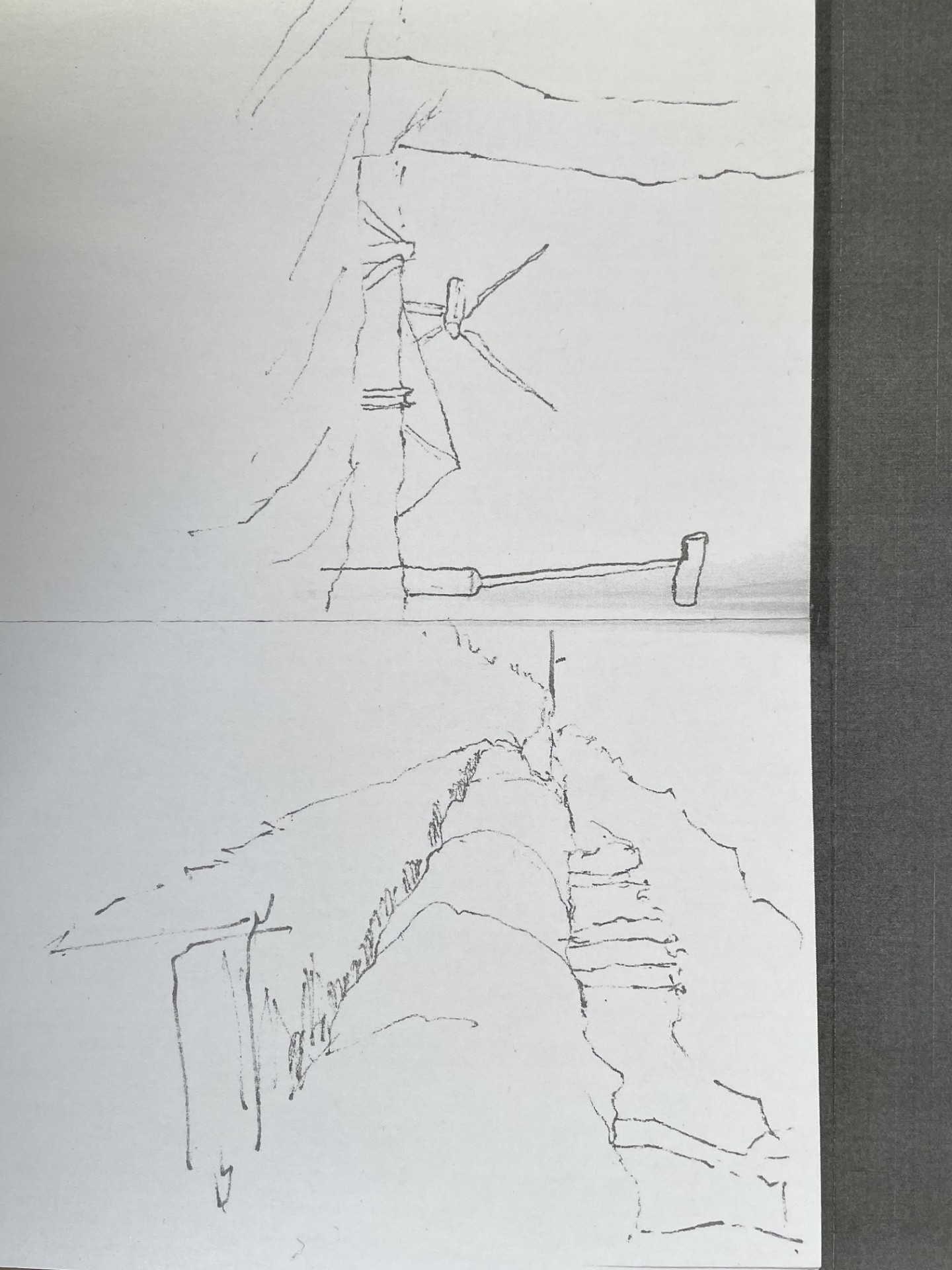
I have a studio, two even, and sometimes I take another room in the house. Rest is here too, in and around the house it is quiet, especially when I am alone. Outside is a lot of space. I walk from the back of the house into the field and there I can let my mind go in the vastness of the landscape. Here I can see so far that it hurts my eyes. When I walk along the field I almost always have ideas. Here I have written poems, thought out concepts, had new inspirations, come up with solutions and new problems. This I attribute to the lack of stimuli, here are solutions, and all the aforementioned, in attentive observations, because there is little to see, hear and smell. But perhaps for this very reason a great deal, if you allow the quantity of space.
The space is physical and mental, but is it also social and societal? Like-minded people are hard to find, a good conversation about your work is a rarity, a collaboration, an interesting crossover, a multidisciplinary project. People from here don’t come to see if something is different from what they’re used to being shown, and if anyone has a particular interest at all, they prefer to keep quiet about it, otherwise they’re just an eelskert. Rural artistry is focused on development of work not audiences.
The other artists whom I asked about their experience of living in the countryside have more or less the same experience. We all three experience the ambivalence of loving the space and tranquility but also the experience of a certain loneliness and the lack of occasions where you meet like-minded people. Are we the “die hards” who know the necessity of committing to art. How much easier would life be if we did like beer and barbecue! Are we meek, masochistic, autistic loners?
How is it that we regularly feel like strangers and yet experience a high degree of security? Are we the village idiots embraced as such by the rest of the village? I am a woman, from a Catholic background [the Northern Netherlands are Protestant], her mouth in front, not speaking Gronings [dialect of Groningen], who did not school her children in the village and, to top it off, an artist (!). A hopeless case. Yet the doors to my house are rarely locked (Don’t try! The neighbors see everything).
I was once called by a fellow villager who asked if our daughter Anne was all right because the neighbor had seen her pink children’s bicycle in the bushes behind our house. How did this woman know that this totally redeemable bicycle belonged to Anne? All was well with our daughter, she was inside playing and had forgotten to bring the thing home. I thanked the fellow villager very much for her thoughtfulness.
I never feel like an eccentric. Although sometimes I do feel excluded, but I don’t mind, I think. Do I want to belong? I am not fond of neighborhood barbecues and Boer Zoekt Vrouw. I live on the edge of the village with the front of the house facing the community, but the back facing the open fields. That’s my place, on the edge of the village with an escape route to the outside. Would that have been different in the city? I don’t think so. Isn’t the choice of a life as an artist always the choice of an escape route? On the outskirts.
It is different for the artists who reside here during an overview period of two months in the Bierumer School; staying, working and marveling at the vastness of the landscape. If you come from the city or a country with mountains, coming here is an introduction to another world. For most, it is very inspiring. I was involved in the foundation of this artists’ initiative. Since 2016, what used to be the Protestant elementary school has been a place with studios and a residency for artists who do not shy away from experimentation. Here they have the opportunity to spend two months in a room overlooking the fields, a guest studio, an old classroom and a large attic as exhibition spaces. Every two months a different, often young, talented artist arrives. I provide educational programs, write for the Bierumer School newspaper and regularly interview the artist in question in an artist talk. I greatly enjoy the vernissages that attract people from all over the world. I always recognize them from a great distance, when they walk through the village or when I pick them up from the train station eight kilometers away. They walk differently, dress differently, act differently. It is a moment of coming home when I meet these strangers. Their temporary surprise and residency makes me stay alert to my surroundings, I mirror myself to their brief escape from reality.
The question is how long the Bierumer school will exist; the municipality wants to get rid of the building and the foundation is struggling to stay financially and organizationally. At the time I write this article, it is all uncertain. I think that is exactly where the need to write this piece comes from; because the Bierumer school may be closing. All this makes me wonder and doubt: what am I doing in Bierum? It remains ambivalent. I don’t have the answer.